
Essential Items for Power Outages: A Room-by-Room Checklist
Last Updated: November 12, 2026
Quick Summary
Essential items for a power outage start with water and food: store one gallon of water per person per day and a three-day supply at minimum, plus shelf-stable food you can eat cold. Add one flashlight per person with extra batteries, a battery-powered radio, a power bank, a first aid kit, and a seven-day supply of prescriptions.
- Store water in food-grade containers and keep them out of direct sunlight.
- Skip candles as your main light source because they start fires and give weak light.
- Never run a generator indoors, in a garage, or near a window.
- Check your kit every six months and replace anything expired or used.
- Test your generator monthly and run it under load for a few minutes.
Table of Contents
- Start With Water and Food Before Anything Else
- Light, Batteries, and Charging Gear for a Power Outage
- First Aid, Medication, and Medical Devices
- Staying Connected: Radio, Phone, and Emergency Alerts
- Safe Generator, Fuel, and Cooking Setup
- Kits for Pets, Kids, and Older Adults
- How Long Will the Power Outage Last? Matching Supplies to Duration
- Build Your Power Outage Kit With Prep2Survive
- Frequently Asked Questions
Start With Water and Food Before Anything Else
Water and food come first in any power outage kit because everything else only buys you comfort. These two keep you alive. Build the boring base before you buy a single gadget.
The math is simple. Most households need a three-day supply at minimum. A two-week supply is smarter if you live where storms knock the grid out for days.
How Much Water Actually Counts as Enough
Plan on one gallon per person per day. That covers drinking, basic cooking, and a little hygiene. A four-person household needs twelve gallons for three days.
Store water in food-grade containers, and keep them out of direct sunlight.
Add water purification tablets or a filter as backup. CDC guidance on emergency water storage explains safe storage and treatment steps in plain terms.
Food That Keeps Without a Fridge
Stock food you can eat cold or with minimal heat. Canned beans, peanut butter, crackers, granola bars, and shelf-stable milk all work. Aim for a seven-day food supply if space allows.
- Manual can opener
- Paper plates and plastic utensils
- A few comfort snacks for kids
Watch out: don't buy food your family has never eaten. A blackout is a bad time to discover everyone hates the chili.
Light, Batteries, and Charging Gear for a Power Outage
Light is the first thing people miss when the power goes out. A good flashlight beats candles every time, and it costs less than a fire.
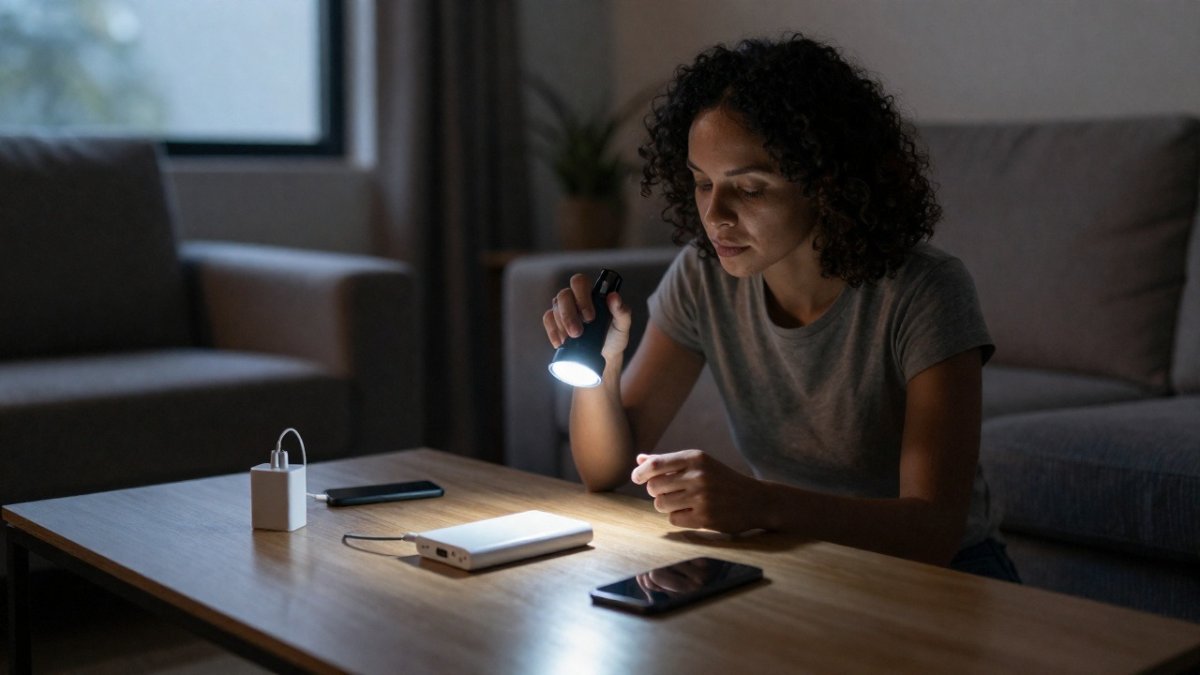
Build this part of your essential items for power outages around three things: light, power, and backups.
- One flashlight per person, plus a headlamp for hands-free work
- Extra batteries in every size your gear uses
- A battery-powered or hand-crank radio
- A portable power bank for phones
- Solar charging gear for longer outages
Skip candles as your main light source. They start fires and give off weak light. Keep one or two for ambiance if you like, but don't rely on them.
If you want gear that's ready to grab, browse our solar and battery-powered emergency tools. For phones specifically, a solar power bank with a built-in flashlight covers charging and light in one unit.
First Aid, Medication, and Medical Devices
A first aid kit handles the small stuff: cuts, burns, sprains, and blisters. Buy a stocked kit rather than assembling one from scratch. It saves time and covers the basics you'd forget.
Check your kit every six months. Replace anything expired or used.
Medication needs more thought. Keep at least a seven-day supply of prescriptions on hand, and rotate them so nothing expires. If anyone in the house uses a medical device that runs on power, like a CPAP machine or oxygen concentrator, talk to your doctor about a backup plan before an outage hits.
A ready-made first aid kit for home and travel takes the guesswork out of this section. If you take daily prescriptions, read our guide to building a 90-day medication backup so you're never caught short.
Staying Connected: Radio, Phone, and Emergency Alerts
Your phone will die fast during an outage. Plan for that.
A battery-powered or hand-crank radio can keep you informed when cell service drops. Tune to a local station for weather updates and outage news.
For phones, keep a power bank charged and ready. Charge devices early when a storm is forecast, not after the lights go out.
Set up wireless emergency alerts on your phone now, before you need them. And bookmark a live outage tracker. PowerOutage.us is a free tool for tracking power outages and staying informed during a blackout. PowerOutage.us outage map shows outages across the country in real time, and it's free.
Have a communication plan too. Pick one out-of-town contact everyone texts if local lines jam.
Safe Generator, Fuel, and Cooking Setup
Generators are useful and dangerous in equal measure. Most guides skip the safety part. We won't.
- Never run a generator indoors, in a garage, or near a window
- Store fuel in approved containers, away from living spaces
- Let the generator cool before refueling
For cooking, a camp stove works well outdoors. Never use it inside. If you're sheltering at home, stick to no-cook foods rather than risking carbon monoxide.
Watch out: carbon monoxide kills quietly. If you run any fuel-burning equipment, put a battery-powered CO alarm in the room.
Kits for Pets, Kids, and Older Adults
A one-size-fits-all emergency bin fails the moment your household includes a pet, a toddler, or a parent who relies on a hearing aid. Build small add-on packs for each person or animal with special needs, and store them with the main kit so nothing gets forgotten in a scramble.
Pets
Pack at least a three-day supply of pet food and water in a waterproof container. Plan pet water needs based on your animal's size and the number of days you need to cover. Include bowls, a leash or carrier, and copies of vaccination records in a sealed bag. Add a favorite toy or blanket to reduce stress. If your pet takes medication, keep a seven-day supply and rotate it. Microchip paperwork and a recent photo help if you get separated.
Infants and Young Children
Store formula, bottles, and a manual can opener if you use ready-to-feed. Plan for at least three days of diapers and wipes, adjust the quantity to your child's age. Include a flashlight designed for small hands, a few screen-free activities like books or puzzles, and comfort snacks. Keep a copy of immunization records and pediatric contact information.
Older Adults
Medication is the priority. Keep a seven-day supply of prescriptions, a current medication list, and a list of emergency contacts in large print. Add spare hearing aid batteries, glasses, and a cane or walker if needed. If a medical device depends on power, such as a CPAP or oxygen concentrator, talk to your doctor about a backup plan and keep a battery-powered alternative if possible. A battery-powered CO alarm is also wise if any fuel-burning equipment is used.
People with Disabilities
Plan for mobility aids, service animal supplies, and communication devices. Keep a backup charger for any powered medical or communication equipment. If you rely on electricity for a medical device, register with your local utility's medical priority list where available. Store a written emergency plan that includes how to reach your support network.
Watch out: don't bury special-needs items at the bottom of a large bin. Use a separate labeled pouch for each person or pet so you can grab it quickly.
How Long Will the Power Outage Last? Matching Supplies to Duration
Outage length and season change what you need. A two-hour blip requires nothing more than charged phones and a flashlight, while a week-long winter storm demands water, heat, and a generator plan. Match your supplies to the likely duration and the weather.
| Outage Length | Water | Food | Light and Power | Extra Prep |
|---|---|---|---|---|
| A few hours | Tap supply fine | Pantry snacks | Flashlights ready | Charge phones early |
| 1-3 days | 1 gallon per person per day (3-day supply) | 3-day shelf-stable supply | Batteries, power bank, radio | Keep fridge closed |
| 4-7 days | 2-week supply if possible | 7-day food supply | Solar charger, extra batteries | Generator or cooking plan |
| 1-2 weeks | Stored and purified water | Full two-week supply | Backup power, fuel | Medical and pet plans |
Short Outages (A Few Hours to One Day)
Keep phones charged when a storm is forecast. A closed refrigerator keeps food cold for a limited time, and a full freezer holds longer. Avoid opening the fridge "just to check."
Multi-Day Outages (2-7 Days)
Water becomes the limiting factor. At one gallon per person per day, a family of four needs 28 gallons for a week. Store water in food-grade containers and rotate every six months. For food, plan shelf-stable meals that require no cooking or minimal heat. A camp stove used outdoors can extend your options, but never use it indoors.
Extended Outages (1-2 Weeks)
This is where a generator or a robust solar setup earns its place. Store fuel in approved containers away from living spaces, and never run a generator indoors or in a garage. Keep a battery-powered CO alarm. For water, a combination of stored water and a filter or purification tablets covers gaps. Maintain a two-week supply of medications and pet food.
Seasonal Scenarios
In cold weather, prioritize heat: extra blankets, sleeping bags, and a safe indoor heating alternative such as a wood stove or a properly vented propane heater. Never use a gas oven or grill indoors. In heat waves, plan for cooling: battery-powered fans, plenty of water, and a way to keep medications cool. If someone in the home has heat-sensitive medication, store it in a cooler with ice packs and monitor temperature.
Maintenance Schedule
A kit is only as good as its upkeep. Check batteries every six months and replace expired food and water. Test your generator monthly and run it under load for a few minutes. Rotate medications and pet food on a schedule. Keep a printed inventory with expiration dates and review it each daylight saving time change.
Watch out: don't assume a generator will start after months of neglect. Test it before storm season, not during the first outage.
Build Your Power Outage Kit With Prep2Survive
Most people buy a kit and never look at it again. Then a storm hits and half the batteries are dead.
Prep2Survive offers a curated set of survival tools and emergency kits without the fear-mongering or the politics. That means you can stay calm instead of scrambling.
Start with water and light, then build from there.
Get started with Prep2Survive and keep your household ready for the next outage.
The next storm isn't a question of if. It's when. Build the kit now, check it twice a year, and the lights going out becomes an inconvenience instead of a crisis.
Frequently Asked Questions
What should be in a power outage emergency kit?
At minimum: one gallon of water per person per day, a three-day supply of non-perishable food, a flashlight or torch with extra batteries, a battery-powered or hand-crank radio, a first-aid kit, medication, phone chargers and a power bank, hygiene supplies, and cash. Add pet food, baby supplies, and any medical equipment your household relies on. Keep it in one grab-and-go container so nobody is hunting through drawers during a power outage.
How do I prepare for three days without power?
Plan around three basics: water, food, and light. Store water for each person, ready-to-eat food that needs no cooking, and enough batteries for flashlights and a radio. Charge power banks before storm season and keep a printed list of emergency contacts. Fill a cooler with ice if a storm is forecast, and know which medical devices need backup power. A three-day supply is a common starting point for outage planning.
How long does food stay safe in the fridge during a power outage?
A closed refrigerator keeps food cold for a limited time, and a full freezer holds temperature longer than a partly full one. Keep doors closed as much as possible and group items together. When power stays off for an extended period, discard perishable items like meat, dairy, and leftovers if they have warmed above safe temperatures. A fridge thermometer takes the guesswork out of it.
Do I really need a generator for a power outage?
Not always, but it helps for longer outages, especially if you rely on medical equipment or need to keep refrigerated medicine cold. If you buy one, run it outdoors only, well away from windows and doors, and never refuel it while it is running. Store fuel in approved containers and follow the manufacturer's instructions. For shorter outages, power banks and battery-powered lights cover most needs without the fuel and safety hassle.
