
What Are the Essential Items for Disaster Preparedness?
Quick Summary
Essential items for disaster preparedness include water, nonperishable food, light and power, first aid and medication, documents with cash, hygiene supplies, and basic clothing and tools. FEMA guidance recommends at least one gallon of water per person per day, and kits should be checked and rotated regularly.
- Store at least one gallon of water per person per day, plus extra for pets and hot climates.
- Pack a seven-day supply of prescriptions along with copies of prescriptions.
- Keep cash in small notes, since card readers fail without power.
- Hygiene items are the most commonly under-packed category, so include soap, sanitizer and garbage bags.
- Check expiry dates every six months and rotate water and food so older stock is used first.
Table of Contents
- What Are the Essential Items for Disaster Preparedness?
- The Core Essentials Every Household Needs for Disaster Preparedness
- Building a 14-Day Emergency Kit Checklist You Can Print
- How to Maintain an Emergency Supply Kit So It Works When You Need It
- Frequently Asked Questions
What Are the Essential Items for Disaster Preparedness?
Last Updated: November 14, 2026
Most households scramble for supplies in the first hours of an emergency, exactly what a planned kit prevents. Disaster preparedness starts with water, food, light, first aid and a way to stay informed, packed before you need them.
The Core Essentials Every Household Needs for Disaster Preparedness
A core kit is built in layers: survival basics first, then items that keep a household functioning without power, water or pharmacy access.
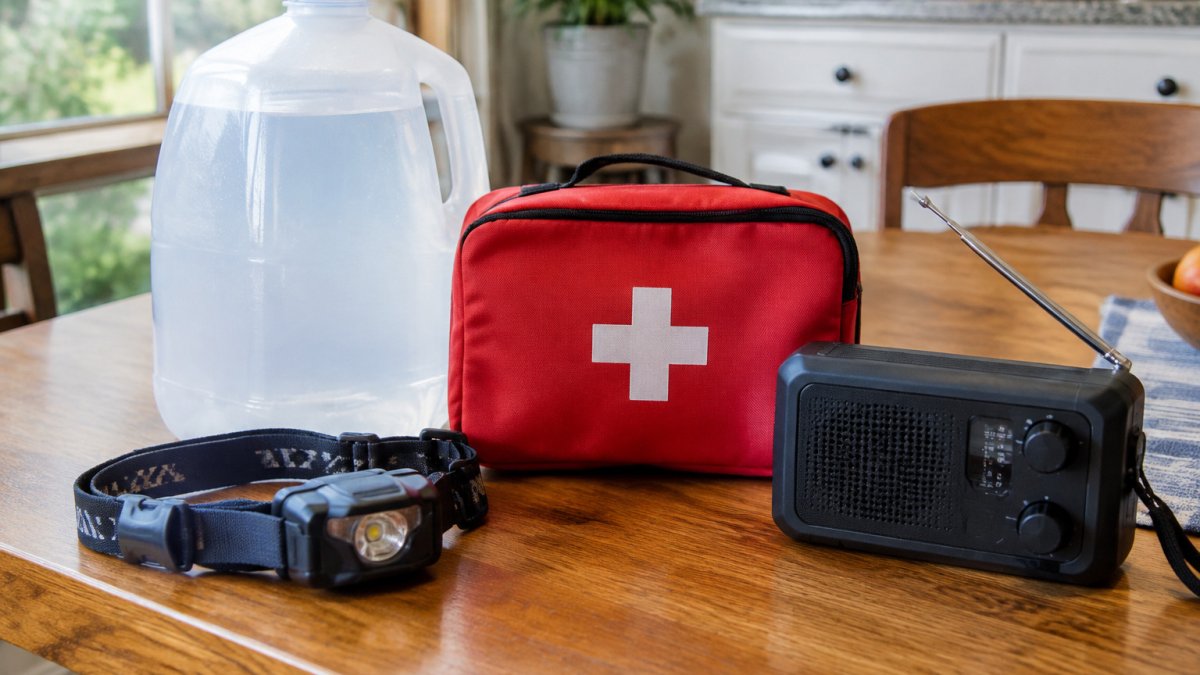
Water. FEMA's emergency water guidance recommends at least one gallon per person per day for drinking and sanitation, plus extra for pets and hot climates. A 5L Emergency Water Storage Jug holds about 1.3 gallons and is easier to carry during an evacuation than a full 5-gallon container; pair stored water with a Portable Built-in Straw Filter System and a backup treatment method, because stored water runs out before a disrupted supply is usually restored.
Food. Plan nonperishable meals you will actually eat, with a manual can opener and a way to heat food without mains power. The Prepper Pack Bucket provides 52 servings.
Light and power. The Rechargeable LED Headlamp runs on USB-C with five modes including an SOS strobe, and The Beast 20,000mAh Solar Power Bank can charge phones and other small devices.
First aid and medication. The Survival First Aid & Emergency Kit and 5-in-1 Survival Whistle are among the products listed for first aid and signalling. Add a seven-day supply of prescriptions and copies.
Communication and documents. Keep copies of IDs, insurance, prescriptions and contacts in a waterproof pouch, plus cash in small notes since card readers fail without power.
Hygiene and sanitation. Pack soap, hand sanitizer, toothbrushes, menstrual supplies, toilet paper, garbage bags and disinfectant, the most commonly under-packed category.
Clothing, shelter and tools. Include sturdy footwear, a change of clothes, rain protection, a blanket or emergency shelter, a multi-tool, duct tape and work gloves. You can also browse the full range of preparedness tools and gear in one place.
Specific needs. Infants need formula, bottles and diapers; older adults may need mobility aids and spare glasses; pets need food, water, medication and carriers.
Watch out: a kit built only from gear purchases can miss medication, documents and hygiene items, which households most often need first.
The article lists the core categories a household kit should cover, with the key figures stated in each section.
| Category | Key figure or item | Note |
|---|---|---|
| Water | At least 1 gallon per person per day | Plus extra for pets and hot climates |
| Water container | 5L Emergency Water Storage Jug (about 1.3 gallons) | Easier to carry during evacuation |
| Food | Prepper Pack Bucket, 52 servings | Pair with a manual can opener |
| Light | Rechargeable LED Headlamp, USB-C, five modes | Includes an SOS strobe |
| Power | The Beast 20,000mAh Solar Power Bank | Charges phones and small devices |
| Hygiene | Soap, sanitizer, toilet paper, garbage bags | Most commonly under-packed category |
Building a 14-Day Emergency Kit Checklist You Can Print
A 14-day plan is the practical middle ground between a 72-hour go-bag and a full pantry stockpile. Scale quantities by household size, then split supplies into three kits, because sheltering in place, evacuating and being stranded in a vehicle have different needs.
Quantity math for 14 days: water at 14 gallons per person, plus roughly one gallon per pet per day; 14 days of nonperishable meals per person, such as Chicken Tortilla Soup Mix, with a manual can opener; a 14-day supply of prescriptions where refills allow, plus copies; and 14 days of soap, sanitizer, menstrual supplies, toilet paper and garbage bags.
Stay-at-home kit (the full 14-day stock): water at 14 gallons per person in 5L jugs; 14 days of nonperishable meals; headlamp, spare batteries and a charged power bank; first aid kit and prescription medication; battery-powered radio and whistle; document copies and cash in small notes; hygiene supplies, garbage bags and a manual can opener; blankets, work gloves and a multi-tool.
Evacuation go-bag (72 hours, one per person): three days of water and ready-to-eat food; medication, ID copies and cash; headlamp, whistle, phone charger and power bank; change of clothes, sturdy shoes and rain protection; pet carrier, pet food and vaccination records if applicable.
Vehicle kit: water, snacks and a blanket; jumper cables, tyre inflator, flashlight and warning triangle; first aid kit, phone charger and printed contact list.
Hazard-specific additions: floods call for waterproof document storage and a way to signal for rescue; wildfires call for N95 masks and a pre-packed evacuation bag; extreme cold calls for extra blankets and hand warmers; heat calls for extra water and electrolyte packets; earthquakes call for sturdy shoes and work gloves by the bed.
Keep each kit in one labelled container so anyone in the house can find it quickly, and print this list to tick items off as you pack.
How to Maintain an Emergency Supply Kit So It Works When You Need It
A kit only helps if it still works when you open it. Check expiry dates every six months, rotate water and food so older stock gets used first, recharge batteries and power banks on the same schedule, and review quantities each time household size or medical needs change.
Store the kit somewhere cool and dry, away from direct sunlight, since heat and moisture shorten shelf life.
Frequently Asked Questions
What are the 10 essential survival kit items?
A practical starting set covers water, non-perishable food, a first aid kit, a flashlight or headlamp with spare batteries, a battery-powered radio or power bank for phone charging, a whistle for signalling, a multi-tool or fire starter, an emergency blanket, personal hygiene supplies and copies of important documents. Prep2Survive's Survival First Aid and Emergency Kit combines first aid with a compass, whistle, fire starter and emergency blanket, which covers several of these in one bag. Start with water and first aid, then add the rest as your budget allows.
How much water should you store for an emergency?
Plan for one gallon of water per person per day, and store at least a three-day supply, with a 14-day supply being a stronger target. Each person also needs water for cooking and hygiene, so add a margin. The 5L Emergency Water Storage Jug holds 5 litres (about 1.3 gallons), a manageable size for carrying water during an evacuation.
How often should you check and replace emergency kit supplies?
Check your kit at least twice a year, for example when the clocks change. Replace expired food and water, swap out batteries, and rotate stored water so it stays fresh. Review medications and first aid items for expiry dates, and update clothing and documents as children grow or contact details change. Freeze-dried emergency food such as the Prepper Pack Bucket has a shelf life of up to 25 years when stored in cool, dry conditions, but the kit should still be inspected regularly.
